About Us
What Lodha Samaj Indore sets out to do, the tradition it keeps, and the two names it takes its bearing from.
Our Purpose
The purpose of Lodha Samaj Indore is to bring service, help and guidance to every member of the community. Lodha Samaj Indore has always favoured adopting the latest technology for the progress of its members. Through its web portal, Lodha Samaj Indore wishes to connect the people of the community so that the community can become organised and its members can establish contact with one another, and through this web portal such services are being provided in which, keeping in mind the family circumstances of the members of the Lodha community, children are inspired and helped, through the portal run by the community, to take up studies, careers, vocational training and similar courses, and help is made available to them when needed through medical facilities and a blood bank — such service work will be undertaken. In addition, capable and well-placed Lodhi brothers who wish to offer such service work through Lodha Samaj are warmly invited.
Our Tradition
Every year during Navratri, Lodha Samaj Indore holds the Navdurga Mahotsav, the Vijayadashami Mahotsav, and the Nagar Kanya Bhoj and Vishal Bhandara. These events are held at Maharana Pratap Chauraha, Mhow Naka, Indore, and are possible with the support of the community's families.
Information about the programmes can be found on the Events page, and the names of those who contribute on the Donate page.
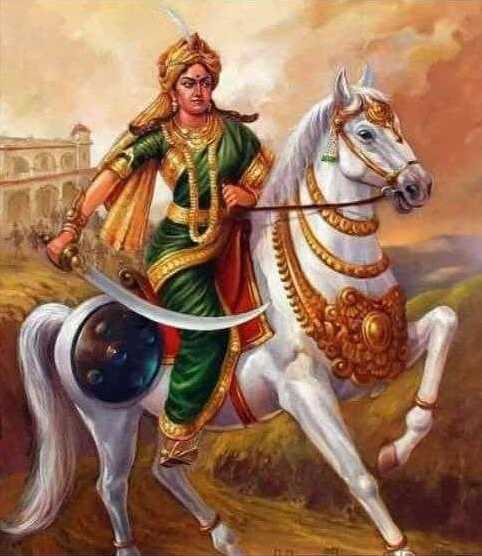
Rani Avanti Bai Lodhi (रानी अवंती बाई लोधी)
Rani Avanti Bai Lodhi was the first woman martyr and brave heroine to play an important part in India's first War of Independence, in 1857.
The brave Rani Avanti Bai Lodhi was born on 16 August 1831 in the village of Mankehni, Seoni district, Madhya Pradesh. Her mother's name was Krishna Bai and her father's name was Rao Jujhar Singh. Her father was a zamindar. Brave and courageous from childhood, Avanti Bai had learned swordsmanship and horse riding as a child. Avanti Bai was married to Vikramaditya Singh, son of Raja Lakshman Singh of the Ramgarh princely state. After his father's death, Vikramaditya Singh became king. As a result of Raja Vikramaditya Singh's ill health, the responsibility of running the state was taken up by his wife, Rani Avanti Bai Lodhi, who was skilled in the affairs of state; they had two sons, Aman Singh and Sher Singh.
Under Governor General Dalhousie's policy of annexation, Vikramaditya Singh was declared unfit and his two sons minors, and the Ramgarh state was taken into the possession of the Court of Wards and British officers were appointed. Rani Avanti Bai Lodhi drove these officers out of Ramgarh and ran the government herself. The Rani ordered the farmers not to obey the British instructions on taxes. This reform work increased the Rani's popularity in the region.
When India's first War of Independence began in May 1857, Rani Avanti Bai Lodhi, to organise against British rule, to free the motherland from British rule, to give the message of revolution and to awaken self-respect, wrote letters to the kings, zamindars and revenue-holders (malguzars) which said: be ready to fight the British to defend the motherland, or sit at home wearing bangles…..
Rani Avanti Bai Lodhi raised an army of four thousand soldiers and led it herself. In 1857, at the village of Khairi near Mandla, the Rani's army defeated the forces of the British officer Waddington, and the British withdrew from Mandla.
Some time later the British, with help from the state of Rewa, attacked Ramgarh and set it on fire. Rani Avanti Bai Lodhi reached the dense forests of the Devharigarh hills, and from there she went on inflicting losses on the British army through guerrilla warfare.
On 20 March 1858, surrounded on all sides, Rani Avanti Bai Lodhi gave up her life by her own sword rather than fall into British hands. She was only 26 years old. The Ramgarh state passed into British control, but the Rani's sacrifice remains an inspiration to our community and our country to this day. 20 March is observed as her martyrdom day.
In her honour, India Post issued postage stamps on 20 March 1988 and on 19 September 2001. The Bargi dam project on the river Narmada near Jabalpur has been named the "Rani Avanti Bai Lodhi Sagar Project", and at Ramgarh a park and an equestrian statue stand in her memory.
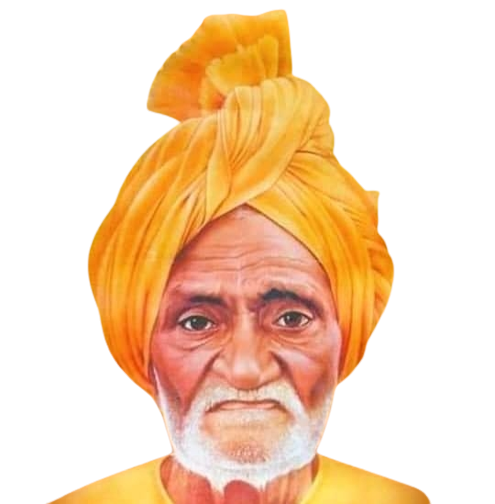
Swami Brahmanand Lodhi (स्वामी ब्रह्मानंद लोधी जी)
India is a land of brave people. In every decade many brave social workers have been born here and have contributed to the upliftment of society. One big name among such social workers is Swami Brahmanand Lodhi. Swami Brahmanand was born roughly 125 years ago in the village of Barhara, in Rath tehsil of Hamirpur district, Uttar Pradesh, into an ordinary farming family. Swami Brahmanand's childhood name was Shivdayal. From childhood, Swami Brahmanand firmly opposed the evils spread in society such as superstition and illiteracy, and did highly commendable work in the field of education. The Swami called on the people of the community to turn their attention to education.
Swami Brahmanand's early education took place in Hamirpur itself. After that, he studied the Mahabharata, the Gita, the Ramayana, the Upanishads and other scriptures at home. For this reason people began to call him by the name Swami Brahmanand. It is also said that holy men had foretold of the boy Shivdayal that this boy would either be a king or a renowned renunciant.
Because the boy Shivdayal was inclined towards spirituality from childhood, his father began to fear that he might become a sadhu. Out of this fear, his father had Swami Brahmanand married, at the age of seven, to Radhabai, daughter of Gopal Mahto of Hamirpur itself. Later, Radhabai gave birth to a son and a daughter. Even after marriage the Swami's mind remained on spirituality. For this reason, at the age of 24, Swami Brahmanand gave up his attachment to his son and wife, put on saffron robes, and at the age of 24 took initiation into sannyas at ‘‘Har ki Pauri’’, on the bank of the Bhagirathi at the most sacred pilgrimage place, Haridwar. After sannyas, Shivdayal Lodhi became renowned in the world as ‘‘Swami Brahmanand’’.